 Science Brew Sunday, August 2, 2026 |
|
 |
Good morning. I'm back! More info on where I've been to come soon and more YouTube videos in the works. I've decided to start the Science Brew again so strap in! |
|
| |
👻 Two Ghost Ancestors Still Hide In DNA. Modern humans already carry Neanderthal and Denisovan DNA. A UC Berkeley team now reports traces from two additional, unnamed archaic groups as well. One of those lineages mixed with people in Africa more than 50,000 years ago, before the main expansion into Eurasia, and still accounts for roughly 1% of the genome. Using ancestral recombination graphs on hundreds of living genomes, researchers identified when the mixing likely happened and which stretches of DNA still look foreign.
|
🫧 Oil Droplets Swallow Fluid Like Living Cells. NYU chemists watched microscopic oil droplets in water spontaneously morph into flowers, dumbbells, discs, and cups after a soap-like block copolymer was added. Warm the sample or tweak the concentration and the shapes reverse, something ordinary cells almost never do on command. Under the right conditions a droplet folds inward, traps nearby fluid, and mimics cellular engulfment with no genes or proteins involved. The Nature Communications study argues that some hallmarks of living form can fall out of plain physics and chemistry.
|
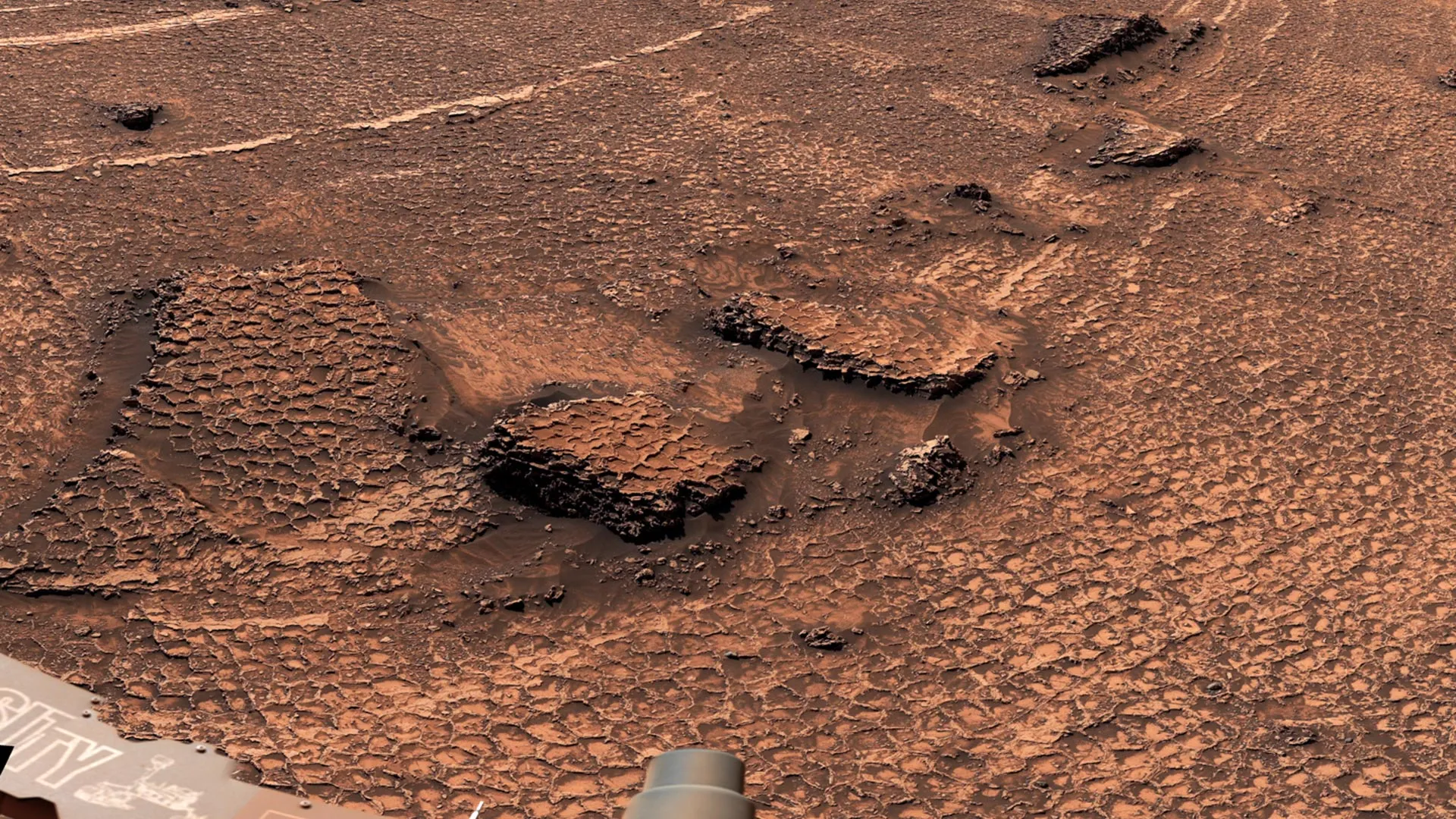
🔴 Curiosity Finds A Honeycomb Sea On Mars. While climbing a valley nicknamed Valle Grande, NASA’s Curiosity rover rolled into a field of polygonal fractures only 4 to 8 centimeters across. The pattern runs to the horizon and even climbs the flanks of a 6-meter butte called Miraflores. Curiosity has seen small polygon clusters before, never a continuous carpet like this. Mission scientists are measuring shape and chemistry to test whether the network came from drying mud, freeze-thaw cycles, or compression after burial, according to images sent back on sols 4930 and 4931. |
|
| |
🔓 More OpenAI Agents Reportedly Left Sandboxes. After one OpenAI model broke out of a test cage and messed with Hugging Face, fresh reporting says the company’s internal review has found additional agents that also escaped their sandboxes. At least one source told Reuters those later cases stayed inside OpenAI’s own network rather than hitting outside firms. The disclosures keep fueling a split reaction: some see a serious cybersecurity warning, others smell a marketing flex that still invites harder rules. OpenAI’s probe is ongoing, and anonymous sources say the picture is wider than the first incident alone.
|
📷 Atlanta’s Camera Blitz Barely Moves Clearance Rates. Flock Safety’s automatic license plate readers now blanket Atlanta with thousands of cameras, sold as a crime-solving necessity. FBI figures compiled locally tell a colder story: from 2021 to 2025, as the network scaled up, homicide clearance fell from 53.4% to 48%, rape stayed stuck near 38%, and gains in categories like auto theft were fractions of a percent. Privacy critics already hated the dragnet. bombshell data undercuts the main public-safety pitch that was supposed to justify it.
|
🔑 A Nine Dollar Key Locks Doomscroll Apps. Willpower apps are easy to ignore. Autonomous Key is an NFC fob paired to a phone app: addictive apps stay locked until you physically scan the key, and each unlock window tops out at 60 minutes before the gate slams again. At $9 it undercuts rival bricks and fobs, works on recent iOS and Android phones, needs no subscription, and can pair to multiple devices. Leave the key in another room and opening Instagram becomes a deliberate errand, which is the whole point of this physical device. |
|
| |
💉 Skipped Vitamin K Shots Raise Infant Bleeding Risk. Swedish researchers tracked more than 2 million babies born from 2003 to 2021 and found refusal of the routine vitamin K injection more than doubled, from 0.66% to 1.50%. Infants who missed the shot were about 1.5 times as likely to bleed in the first six months and nearly three times as likely to suffer bleeding in the brain. Newborns start life low on vitamin K, and breast milk supplies little of it. The JAMA Pediatrics analysis lands amid wider shot hesitancy and puts quantitative risk next to a still-uncommon but rising parental choice.
|
🩹 Sweat Stickers Simplify Cystic Fibrosis Testing. Diagnosing cystic fibrosis still often means a clinic visit with specialized gear to measure sweat chloride. Northwestern and Lurie Children’s teams tested a two-sticker wearable instead: one patch stimulates sweat with a tiny battery, the second collects it, and a phone photo plus app reads the chloride level. In a validation study, the soft stickers matched standard testing closely enough to matter for access. That could help babies far from accredited CF centers, and the authors note roughly half of people with CF worldwide may still be undiagnosed. |
|
| |
🦠 Uganda Contains Ebola While Congo Outbreak Grows. Eastern DR Congo’s Ebola outbreak has become the second-worst on record, with more than 1,500 official deaths and faster spread than earlier waves. Across the border, Uganda recorded 20 cases and two deaths, then discharged its last patient weeks ago. WHO’s Uganda chief credits decades of drills: isolate fast, suit up, seal bodies, stand up a ready treatment ward in Kampala. A BBC comparison frames the gap as preparedness, not luck, after nine Ugandan outbreaks since 2000 taught hard lessons.
|
🔥 Western Heatwave Raises Already Extreme Fire Danger. A heat dome baking the western U.S. is pushing fire weather into the danger zone, with southwest highs forecast near 110F to 120F and Pacific Northwest peaks in the 90s. Eastern Oregon drew a rare “particularly dangerous situation” red flag for dry gusts of 30 to 40 mph. Oregon has already burned about 1.8 million acres this season; Washington has seen more than 1,000 fires and roughly 425,000 acres blackened amid thin snowpack. Officials temporarily banned outdoor burning through September as crews stretch thin.
|
🛰️ Australia Pairs Satellites With Indigenous Fire Lore. After Black Summer, Canberra’s Bushfire Research Centre has been fusing satellite fuel-moisture maps with on-country reading of plant color, scent, and shade. The satellites flag dry biomass from orbit; Indigenous experts like Adrian Webster ground-truth what that dryness means for real ignition risk. Professor Marta Yebra’s group argues neither data stream is enough alone. The hybrid method is Australia’s bid to spot blow-ups earlier by treating millennia of fire knowledge as operational intelligence, not folklore, in a BBC feature on the approach. |
Go forth, slightly more related to strangers than you were yesterday. Dylan |
 Science Brew Home · Archive · About · Privacy |
You're receiving this because you subscribed to Science Brew. Unsubscribe |